Better Balance
Natalie Wieneroider | JUL 16, 2023
better balance
balance strength
single leg balance test
balance improvement
Better Balance
Natalie Wieneroider | JUL 16, 2023
Better Balance
Poor balance can significantly disrupt our quality of life. In particular, poor balance is a major contributor to falls that result in injury.
Our balance depends on the interaction of our senses of sight, touch, etc. and our ability to control the movement of our bodies. We achieve balance and stability when equal forces create coordinated movements. In other words, we are stable when our muscles all work together and produce the right amount of force to keep us still. True balance is the stillness created by a A LOT of muscle activity.
So, it is important to work on both your strength and balance.
References
1. Falls & Balance, Neuroscience Research Australia, https://www.neura.edu.au/health/falls-balance
2. BOSU = Balance and Strength, Nancy Burns, Body Wisdom Studio Newsletter, 1 June 2015
Single Leg Balance Test
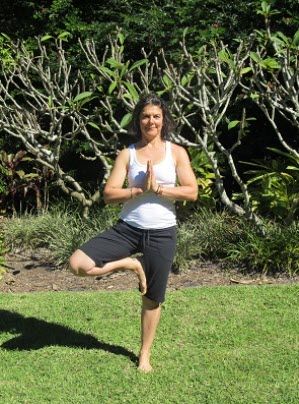
Losing our sense of balance may severely limit our mobility. As standing on one leg unsupported is critical skill for walking, then the simple one-legged standing balance test is ideal for initially assessing our balance capability. Standing on one leg requires leg strength, static balance, and integration of eyes, ear, brain and nervous system. Here is how to test yourself:
Then try again with your eyes closed. This is normally very difficult and why you may need the chair or other object for safety. I found the standing test with eyes open easy but when I closed my eyes, I got the wobbles nearly straight away.
Researchers from the University of Missouri have established norms for Single Leg Stance for different ages.
Norms Single Leg Stance
AGE (YEARS) OPEN EYES CLOSED EYES
20-29 29 seconds 21 seconds
30-39 29 seconds 14 seconds
40-49 29 seconds 10 seconds
50-59 28 seconds 8 seconds
60-69 26 seconds 5 seconds
70-79 14 seconds 4 seconds
Give the test a go. What is your balance-based age compared to your actual age?
Use the results to set yourself an improvement goal.
Reference:
One Leg Standing Balance--Test Yourself, Mobile Physical Therapy October 2010, http://www.mynewsletterbuilder.com/email/newsletter/1410537417
Natalie Wieneroider | JUL 16, 2023
Share this blog post
 OfferingTree
© 2026 Well Aligned - Strong Flexible Healthy